
Powered By



Hereditary angioedema (HAE) attacks can sometimes feel like they come out of nowhere. However, some people notice early warning signs before swelling starts.
Learning to recognize these early signs may help you act sooner and talk with your doctor about your treatment plan. This article explains the signs that may occur before an HAE attack and what to do if you notice them.
Prodromes, also called prodromal symptoms, are early warning signs that can happen before an HAE attack starts. They may appear hours before an attack, and some people notice them days in advance.
Sign up to view the results!
 Continue with Facebook
Continue with Email
Continue with Facebook
Continue with Email
Some people with HAE use these signs to recognize when swelling may be starting. However, not every attack has clear early warning signs.
In a survey of 208 people with HAE, about 60 percent said they noticed early warning signs before a swelling attack.
Early warning signs can be subtle and easy to miss. You may not connect them to HAE until you notice a pattern over time.
The signs vary from person to person, but these are some of the most commonly reported:
Feeling unusually tired is one of the most commonly reported early signs of an HAE attack. In the survey mentioned above, 64 percent of the participants reported tiredness or fatigue before an attack.
This may feel like being sluggish, drained, or low on energy, even after a normal amount of sleep. Fatigue can also make it challenging to get work done or complete daily activities.
Some people notice shifts in their mood in the hours or days before an HAE attack. This can include increased irritability, anxiety, or a low mood that feels out of character.
“Malaise” is a term for a general feeling of being unwell. It may be hard to describe exactly what’s wrong, other than feeling like something is off. Feeling uneasy, ill, or weak could be a sign that a HAE attack is coming.
When HAE swelling affects the stomach or gastrointestinal tract, it can cause nausea, diarrhea, vomiting, and abdominal pain.
For some people, nausea or stomach pain can be an early indication of an HAE attack. In the survey of 208 people with HAE, about 50 percent reported stomach pain or abdominal pressure before swelling starts.
Some people notice muscle aches or joint pain before an HAE attack begins. This discomfort may feel like general soreness before any swelling appears.
A feeling of tightness, pressure, or tingling in a specific area on the skin may be a sign that swelling will develop there later.
One of the most important early signs is a type of rash called erythema marginatum. It usually appears as discolored, ring-shaped patches on the arms, legs, or trunk. Erythema marginatum usually doesn’t appear on the face, palms of the hands, or soles of the feet.
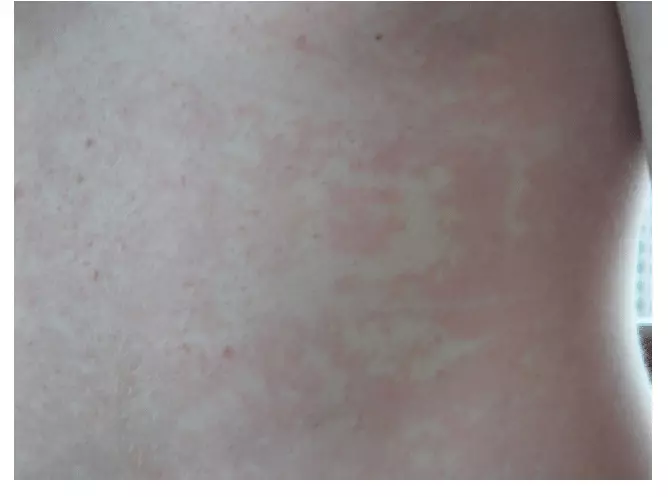
The rash typically isn’t itchy or painful like hives, so it can sometimes go unnoticed. It may also disappear and come back within hours. About one-third of people with HAE experience erythema marginatum before swelling starts.
The timing of prodromes can vary widely. For some people, they provide warning signs hours or even days before a swelling attack.
Prodromes often begin hours before an attack. In the survey, 27 percent of people noticed prodromes two to six hours before swelling, while 29 percent had prodromal symptoms more than six hours before swelling.
Knowing the difference between an early warning sign and an HAE attack may help you decide what to do next.
Early warning signs are usually milder. You might feel tired, achy, or nauseated or notice tightness, tingling, or a nonitchy rash.
During an attack, symptoms are usually more severe and may include visible swelling, more pain, or trouble moving or using the affected body part.
One simple way to think about it: Early warning signs happen before swelling starts. An HAE attack is when swelling is already happening.
It can be easy to confuse HAE symptoms, especially swelling, with an allergic reaction, but they’re different conditions.
HAE usually doesn’t involve itching, whereas allergic reactions often do, especially when hives are present. Although some people develop a rash as a prodromal symptom, it’s different from the hives caused by an allergic reaction.
Allergic reactions are often treated with antihistamines, corticosteroids, or epinephrine, depending on how severe they are. However, these medications don’t treat HAE attacks.
Any throat swelling or trouble breathing is a medical emergency, whether it’s caused by HAE or an allergic reaction.
Noticing patterns in your early symptoms can make a real difference. Studies show that many people with HAE can predict an attack based on prodromes and take action sooner.
Tracking your early symptoms can help you:
Keeping a symptom journal or diary can help. Try to keep track of what happens before and during each attack, including your symptoms and possible triggers. These may include emotional stress, physical activity, surgery, dental work, estrogen-containing birth control, or medications such as ACE inhibitors.
If you notice prodromal symptoms, it’s important to act early by following your HAE care plan.
If you notice any of the following symptoms, seek emergency care or call 911 immediately. These can be signs of throat or airway swelling, which can be life-threatening:
HAE attacks don’t always start without warning. Some people notice early signs, such as fatigue, mood changes, nausea, muscle aches, or a nonitchy rash, before swelling begins.
Learning your own pattern may help you act sooner and feel more prepared. These signs don’t happen before every attack, but they can provide helpful clues.
On myHAEteam, people share their experiences with hereditary angioedema, get advice, and find support from others who understand.
Have you noticed any early warning signs before an HAE attack starts? Let others know in the comments below.
Get updates directly to your inbox.




 Continue with Facebook
Continue with Email
Continue with Facebook
Continue with Email
Continue with Facebook
Continue with Email
Continue with Facebook
Continue with Email
Become a member to get even more





 Join
Join

 Your Privacy Choices

This is a member-feature!
Sign up for free to view article comments.
We'd love to hear from you! Please share your name and email to post and read comments.
You'll also get the latest articles directly to your inbox.