
Powered By



Whether you have a family history of hereditary angioedema (HAE) or your child’s allergist suspects they have the condition, unexplained swelling can be frightening. Knowing what HAE can look like in children may help you recognize symptoms and seek medical care sooner.
Here’s what to know about when HAE symptoms may begin, what signs to watch for, and how to help your child get the right care during an attack.
HAE symptoms often begin in childhood and may appear as early as age 2. About half of children with type 1 or type 2 HAE develop symptoms by age 10, and nearly everyone with these forms experiences symptoms by age 20.
Attacks may become more frequent and severe around puberty. Some research suggests that attacks may also begin earlier in females than in males, according to the journal Pediatric Allergy and Immunology.
The earlier HAE symptoms begin, the more likely a child may be to experience a more severe course of the disease. Even when symptoms appear early, however, diagnosis can be delayed.
Because HAE is rare, your child’s pediatrician may not initially consider testing for it. HAE symptoms may also resemble more common childhood conditions, such as allergies or appendicitis.
When a child has swelling, allergies may be the first suspected cause. However, if your child doesn’t respond to allergy medications such as antihistamines, epinephrine, or corticosteroids, it may be a clue that something else is causing the swelling.
HAE swelling doesn’t improve with these medications because HAE is not an allergic reaction and isn’t driven by histamine. Children may also have swelling without hives or itching, which are common with allergies.
Children with HAE may also be misdiagnosed with appendicitis or biliary disorders, which involve the gallbladder, liver, and bile ducts. Some children and adolescents may not receive the correct diagnosis until adulthood.
If you suspect that your child may have HAE, it can be useful to watch for and record their symptoms. Although symptoms can vary widely, you may begin to notice a pattern.
HAE commonly causes swelling of the hands, feet, face, lips, and genitals without hives or itching. The swelling typically worsens over the first day, may last up to five days, and doesn’t improve with allergy medications.
Other symptoms your child may experience include:
According to Pediatric Allergy and Immunology, in uncircumcised or partially circumcised boys, genital swelling can sometimes lead to paraphimosis. This happens when the foreskin becomes trapped behind the head of the penis and cannot be pulled back over it. Paraphimosis is a medical emergency and needs prompt treatment.
Some children experience early warning signs before an attack. These are sometimes called prodromal symptoms. Recognizing them may help you prepare when an attack occurs.
One common early symptom is erythema marginatum, a flat, nonitchy skin rash. Some research suggests that it occurs in around 50 percent of people with HAE. Because erythema marginatum can resemble hives, it may be mistaken for an allergic rash.
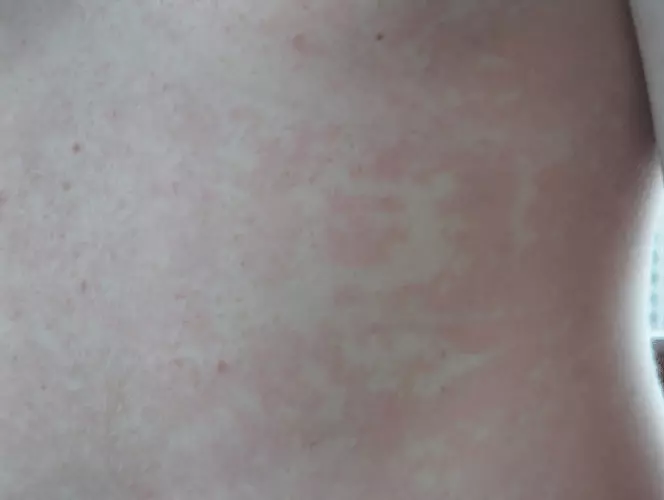
Other early symptoms may include fatigue, muscle pain, stomach pain, and nausea. Some children also experience skin tingling in the affected area 12 to 24 hours before an attack.
HAE attacks sometimes follow an external event in your child’s life. At other times, swelling may occur without a clear cause. Learning your child’s potential triggers may help you prepare for an attack.
Stress is one of the most commonly reported triggers. In one small study, 60 percent of children reported stress as a trigger.
Other potential triggers include:
Consider keeping a spreadsheet or journal to document your child’s possible triggers, along with when and where attacks occur. This record may help you spot patterns and help your child’s healthcare provider evaluate how well treatment is working.

Call 911 or your local emergency number and seek emergency care immediately if your child has any tongue or throat swelling, trouble swallowing, or trouble breathing, even if they’ve already used on-demand medication. Airway swelling can quickly become life-threatening.
Keep a medical information card with your child or accessible on their phone, and consider having them wear a medical ID bracelet. Include their diagnosis, the medication needed during an attack, and contact information for their HAE specialist and a family emergency contact.
Work with your child’s HAE specialist to create an emergency plan that explains which medications your child needs and how to use them. The specialist can also help you plan how to get your child appropriate care during an emergency.
Several HAE treatments can help stop attacks or prevent them. With an individualized treatment plan, many children with HAE can take part in school, activities, and everyday life. Talk with your child’s HAE specialist about managing the condition while supporting their routines and quality of life.
Children with HAE need regular checkups. At these visits, their doctor can review their attacks, evaluate how well treatment is working, and adjust the treatment plan as they grow. Some medication dosages depend on your child’s age and weight.
Tell your child’s care team how HAE is affecting them mentally and emotionally. Children may become fearful of attacks, and swelling or the unpredictability of attacks may cause embarrassment and stress that affects their quality of life.
If your child is having difficulty coping, their healthcare provider may be able to recommend support groups or therapy.
On myHAEteam, people share their experiences with hereditary angioedema, get advice, and find support from others who understand.
If your child has been diagnosed with HAE, when did their symptoms first appear? Let others know in the comments below.
Get updates directly to your inbox.





 Continue with Facebook
Continue with Email
Continue with Facebook
Continue with Email
Continue with Facebook
Continue with Email
Continue with Facebook
Continue with Email
Become a member to get even more





 Join
Join

 Your Privacy Choices

This is a member-feature!
Sign up for free to view article comments.
We'd love to hear from you! Please share your name and email to post and read comments.
You'll also get the latest articles directly to your inbox.